




Rubber Roof Damage: Repair or Replace?
Reading Time: 3 minutes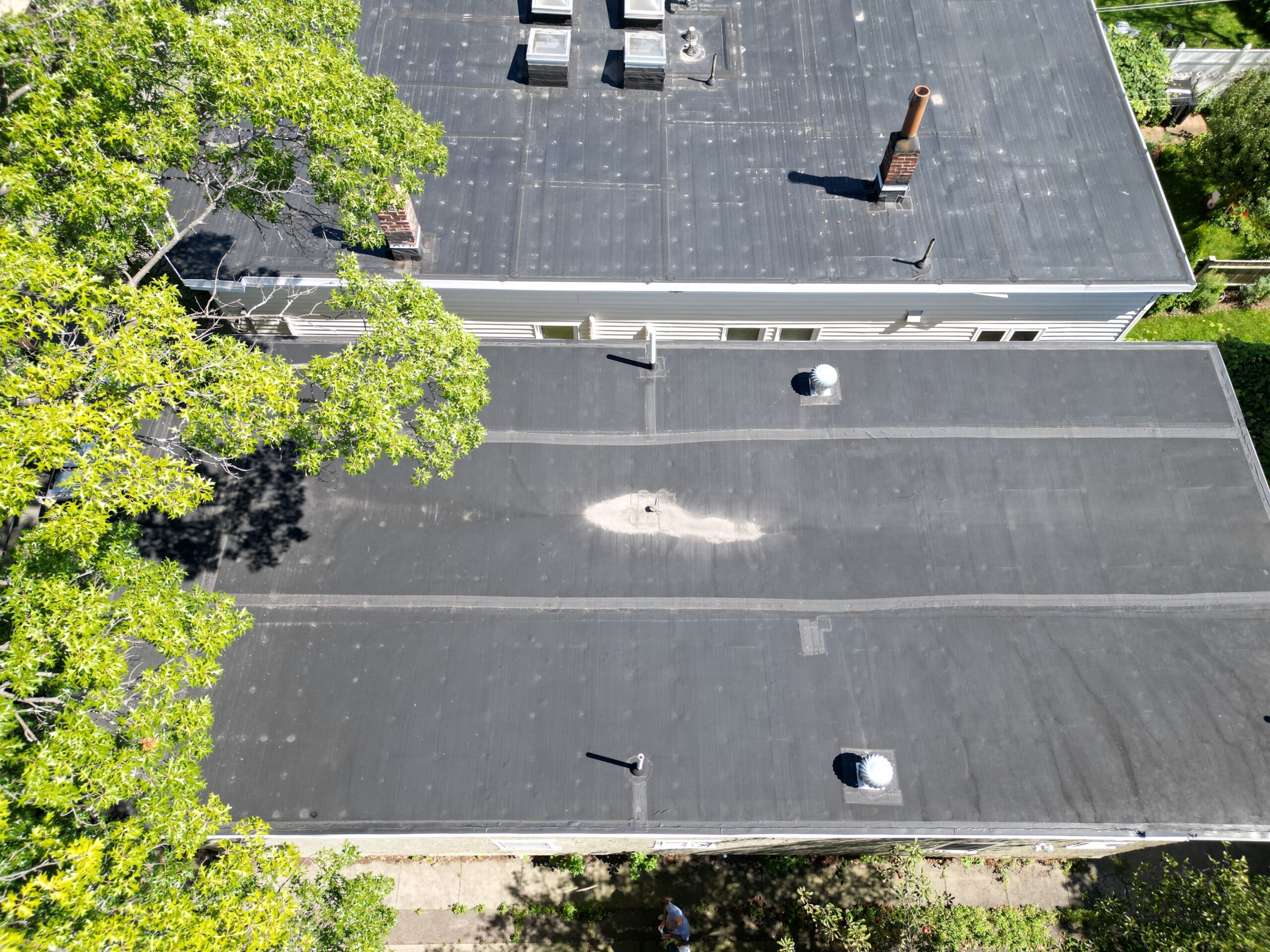
Introduction
Rubber roofs (EPDM) are widely used across Massachusetts thanks to their flexibility and relatively low upfront cost. But over time — especially in Boston’s harsh climate — damage becomes inevitable.
At ID Flat Roof, one of the most common questions we hear is:
“Should I repair my rubber roof, or is it time to replace it?”
This guide gives a clear, experience-based answer — no guesswork.
As we tell clients: “If you’re patching more than planning, it’s time to rethink the whole system.”
Common Types of Rubber Roof Damage
Understanding the type of damage is the first step.
1. Seam Separation
Rubber roofs rely on glued seams, which weaken over time — especially with temperature changes.
2. Cracks and Shrinkage
Freeze-thaw cycles in Massachusetts cause the membrane to expand and contract, leading to cracks.
3. Ponding Water Damage
Standing water accelerates deterioration and increases leak risk.
4. Punctures and Surface Wear
Foot traffic, debris, and aging can damage the membrane surface.
👉 In many cases, what looks like a small issue is part of a larger system failure.
Every winter, we see roofs where “minor” seam separation turns into major leaks by April — simply because glue doesn’t survive New England.
When Repairing a Rubber Roof Makes Sense
Repair is a good option if:
- the damage is localized
- the roof is under 10–15 years old
- seams are mostly intact
- there are no widespread leaks
- drainage is functioning properly
👉 In these situations, a professional repair can extend the roof’s lifespan.
When Replacement Is the Better Option
Repair stops making sense when problems become systemic.
You should strongly consider replacement if:
- leaks are recurring
- multiple areas are damaged
- seams are failing across the roof
- ponding water is persistent
- the roof is 15–25+ years old
👉 At this stage, repairs often become a short-term expense with no long-term value.
+1 (978) 381-3838
The Real Cost of Repeated Repairs
Many property owners try to “extend” the life of a rubber roof with ongoing repairs.
The reality:
- costs add up quickly
- leaks return
- interior damage increases
- business operations may be affected
👉 We often see clients spend thousands on repairs before deciding to replace — when replacing earlier would have been more cost-effective.
Why Rubber Roofs Often Fail in Massachusetts
Boston’s climate accelerates wear:
- constant freeze-thaw cycles
- heavy snow loads
- frequent rain
- temperature fluctuations
👉 Glued seams are the weakest point — and one of the main reasons leaks keep coming back.
Why Upgrading to PVC Roofing Is Often the Smarter Move
When replacement is necessary, the next decision is which material to choose.
At ID Flat Roof, we often recommend upgrading to PVC roofing — especially for commercial properties.
Key advantages of PVC over rubber:
1. Welded Seams Instead of Glue
Heat-welded seams create a permanent bond — eliminating one of the biggest failure points.
2. Better Resistance to Ponding Water
PVC performs significantly better in standing water conditions.
3. Strong Performance in Massachusetts Weather
Handles freeze-thaw cycles without the same level of degradation.
4. Longer Lifespan
Typically 20–30+ years with proper installation.
5. Lower Long-Term Costs
Fewer repairs and less maintenance over time.
👉 Our crew puts it simply: “Glue fails. Weld holds.” That’s why so many Boston property managers switch to PVC after one too many springtime emergencies.
Repair vs Replace: Quick Decision Guide
Choose Repair if:
- damage is minor and isolated
- roof is relatively new
- no recurring issues
Choose Replacement if:
- leaks keep coming back
- repairs are frequent
- roof is aging
- seams are failing
👉 And if replacing — PVC is often the most reliable long-term investment.
What to Expect from a Professional Evaluation
At ID Flat Roof, we don’t guess — we inspect.
Our process includes:
- Full roof assessment
- Moisture detection
- Structural evaluation
- Honest recommendation (repair vs replace)
👉 Our goal is to give you the most cost-effective long-term solution.
FAQ
Can a damaged rubber roof be repaired?
Yes, if the damage is localized and the roof is still in good overall condition.
How long does a rubber roof last in Massachusetts?
Typically 15–25 years, depending on installation quality and maintenance.
When should I replace my rubber roof?
When leaks are recurring, seams are failing, or the roof is nearing the end of its lifespan.
Is PVC better than a rubber roof?
In many cases, yes — especially for long-term durability and leak prevention.
Conclusion
Rubber roof damage is inevitable over time — especially in Massachusetts.
The key is knowing when a repair is enough and when it’s time to invest in a long-term solution.
If your roof is showing signs of widespread wear or repeated leaks, upgrading to a PVC roofing system can provide better performance, fewer issues, and lower long-term costs.
At ID Flat Roof, we help property owners make the right decision — based on real conditions, not guesswork.
Stop Guessing. Start Knowing.
If your rubber roof keeps giving you trouble, it’s not bad luck — it’s a material limit. Call ID Flat Roof for an honest assessment and a solution built to last.

Denis is the driving force behind ID Flat Roof, a leading company in Boston specializing in flat roof repair and installation for over 20 years.
Expertise:
Denis excels in PVC, TPO, EPDM, and rubber roofing. His meticulous approach ensures quality and customer satisfaction.
Innovation:
Denis incorporates cutting-edge solutions like skylights and solar PV roofing.