




What Is a Rubber Roof and How Long Does It Last? (2026 Guide)
Reading Time: 3 minutes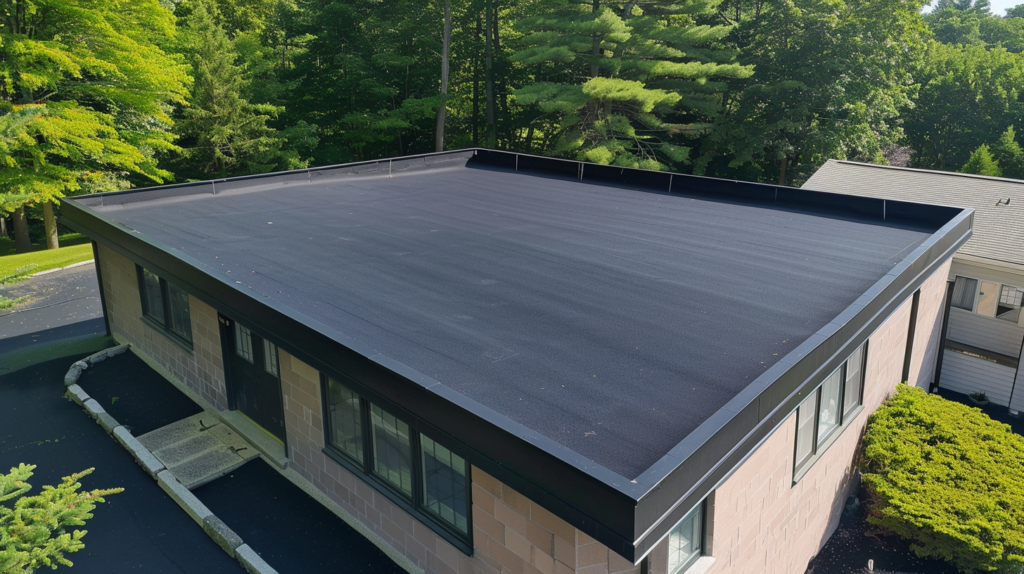
Introduction
A rubber roof is one of the most traditional types of flat roofing systems used in residential and commercial buildings.
It is commonly known as EPDM roofing, a synthetic rubber membrane that has been used for decades in the roofing industry.
While still widely installed, it is now considered a more traditional solution, with newer technologies offering improved performance in many cases.
What Is a Rubber Roof?
A rubber roof (EPDM) is a single-ply roofing membrane made from synthetic rubber.
It is typically installed in large sheets and sealed at the seams using adhesive or tape systems.
Key characteristics:
- flexible material
- black or white surface
- glued seam installation
- commonly used on flat roofs
👉 It has been a standard roofing option for many years.
How Long Does a Rubber Roof Last?
A rubber roof typically lasts:
- 15 to 25 years, depending on conditions
However, in climates like Massachusetts, lifespan can be shorter due to:
- freeze-thaw cycles
- ponding water
- seam degradation over time
- UV exposure
👉 Real-world performance often depends heavily on installation quality and maintenance.
After three back-to-back April thaws, our crews at ID Flat Roof have noticed a pattern: rubber membranes look fine in July, but those glued seams quietly pull apart by March. It’s not the material failing—it’s the adhesive giving up on the freeze-thaw cycle.
Common Issues with Rubber Roofs
While rubber roofing is durable, it has known limitations:
1. Seams Depend on Adhesive
- seams are glued, not welded
- adhesive can weaken over time
2. Ponding Water Sensitivity
- standing water can stress the membrane
- long-term exposure may accelerate wear
3. Aging and Shrinkage
- material can shrink slightly over time
- may cause pulling at seams or edges
4. Repair Dependency
- patch repairs are common
- repeated repairs may not solve system-wide issues
Is Rubber Roofing Still a Good Option?
Yes — rubber roofing is still used and can perform well when:
- properly installed
- regularly maintained
- used in low-risk environments
👉 However, it is no longer the most advanced option available.
+1 (978) 381-3838
Modern Alternatives to Rubber Roofing
Today, property owners often consider newer systems that offer improved performance.
PVC Roofing (Most Advanced Option in Many Cases)
PVC is widely considered a more modern and higher-performance alternative.
Advantages over rubber roofing:
- heat-welded seams (stronger than adhesive)
- better resistance to ponding water
- longer lifespan (20–30+ years)
- lower long-term maintenance
👉 This makes it a preferred option for many commercial buildings in Boston.
TPO Roofing (Mid-Range Alternative)
- newer than EPDM
- energy-efficient surface
- performance depends on product quality
Rubber Roof vs Modern Systems (Simple Comparison)
- Rubber (EPDM): traditional, reliable, but older technology
- TPO: newer, mid-range performance
- PVC: most durable and consistent in demanding conditions
👉 The industry has gradually shifted toward welded-seam systems like PVC.
Real-World Perspective in Massachusetts
From roofing inspections in Boston:
- older rubber roofs often show seam-related issues
- repairs become more frequent over time
- many replacements are driven by aging EPDM systems
👉 This is why upgrades to modern systems are common in commercial roofing.
On job sites across MA, we see the same timeline: a rubber roof gets its first patch around year 10, another by year 15, and by year 18, the crew stops patching and starts talking about replacement. At ID Flat Roof, we’ve learned that tracking repair frequency tells you more about roof health than any single inspection.
When Rubber Roofing Still Makes Sense
Rubber roofing may still be suitable if:
- budget is limited
- short-term solution is needed
- roof conditions are stable
- building is not critical infrastructure
When It May Be Time to Upgrade
Consider replacement if:
- leaks are recurring
- seams are failing
- roof is over 15–20 years old
- maintenance costs are increasing
👉 At this stage, upgrading to a more modern system often makes more sense.
FAQ
What is a rubber roof?
A rubber roof is a flat roofing system made from EPDM synthetic rubber membrane.
How long does a rubber roof last?
Typically 15–25 years, depending on conditions and maintenance.
Is rubber roofing still good?
Yes, but it is considered a traditional system compared to newer alternatives.
What is better than a rubber roof?
PVC roofing is often considered a more advanced option due to welded seams and longer lifespan.
Conclusion
Rubber roofing (EPDM) has been a widely used and reliable flat roofing solution for decades.
However, it is now considered a more traditional technology, and many property owners are moving toward modern systems that offer improved durability and performance.
In many commercial applications in Massachusetts, PVC roofing has become a leading alternative due to its stronger seams, better water resistance, and longer service life.
At ID Flat Roof, we help property owners evaluate whether repair, replacement, or system upgrade is the best long-term decision.
Don’t Guess About Your Rubber Roof’s Timeline
If you’re wondering whether your EPDM roof has more life left or if it’s time to upgrade, call ID Flat Roof for a straightforward, on-site assessment built on real Massachusetts conditions.

Denis is the driving force behind ID Flat Roof, a leading company in Boston specializing in flat roof repair and installation for over 20 years.
Expertise:
Denis excels in PVC, TPO, EPDM, and rubber roofing. His meticulous approach ensures quality and customer satisfaction.
Innovation:
Denis incorporates cutting-edge solutions like skylights and solar PV roofing.