


Search for:

Uncategorized

Rubber Roof Boston: Pros, Cons & Alternatives

Reading Time: 4 minutes
Introduction

Rubber roofing (EPDM) has been widely used in Boston and across Massachusetts for decades. It’s a familiar and cost-effective option — but like any roofing system, it has limitations.

At ID Flat Roof, we regularly inspect, repair, and replace rubber roofs. In many cases, they perform well — but in others, property owners face recurring issues that lead them to consider alternatives.

This guide provides a clear, experience-based overview of:

  • how rubber roofs perform in Boston
  • key advantages and drawbacks
  • when they make sense
  • what alternatives to consider in 2026

At ID Flat Roof, we’ve learned this after years in the field: “A rubber roof isn’t bad — it just has an expiration date, especially in New England.”

What Is a Rubber Roof?

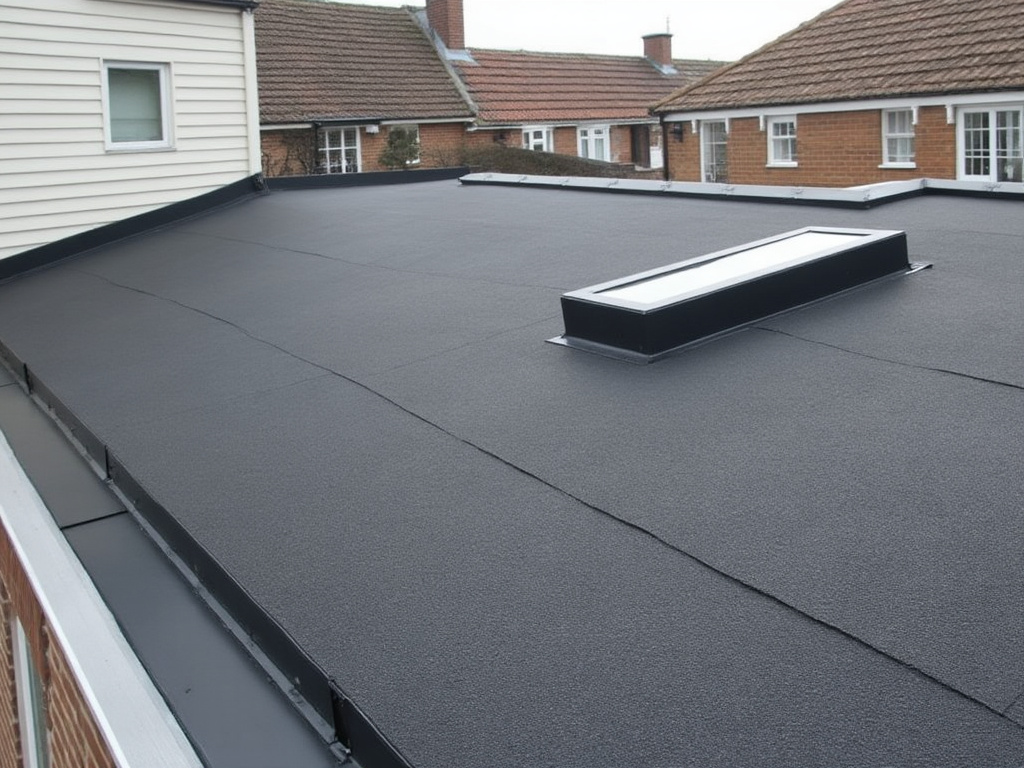
A rubber roof (EPDM) is a synthetic membrane commonly used on flat and low-slope roofs.

Key characteristics:

  • flexible material
  • installed in large sheets
  • seams are glued or taped
  • widely used in commercial and residential properties

👉 It’s known for simplicity and relatively low upfront cost.

How Rubber Roofs Perform in Boston

Massachusetts weather creates a demanding environment:

  • freeze-thaw cycles
  • snow and ice accumulation
  • heavy rain
  • temperature fluctuations

👉 Rubber roofs can handle these conditions — but performance depends heavily on installation quality and maintenance.

Pros of Rubber Roofing

1. Lower Upfront Cost

Rubber roofing is typically more affordable to install compared to other systems.

2. Flexibility

The material expands and contracts with temperature changes, reducing immediate stress.

3. Widely Available

Most contractors are familiar with rubber roof installation and repairs.

4. Proven Track Record

EPDM has been used for decades and is a known, established system.

Cons of Rubber Roofing

1. Seam Vulnerability

Rubber roofs rely on glued seams.

Over time:

  • adhesive weakens
  • seams separate
  • leaks develop

👉 This is one of the most common issues we see in Boston.

2. Performance in Ponding Water

Standing water can accelerate wear and increase leak risk.

3. Frequent Repairs Over Time

As the roof ages:

  • seams fail
  • patches increase
  • leaks become recurring

4. Shorter Lifespan Compared to Some Alternatives

Typical lifespan:

  • 15–25 years

👉 Real-world performance varies based on conditions and maintenance.

5. Sensitivity to Installation Quality

Improper installation often leads to early problems.

When a Rubber Roof Makes Sense

Rubber roofing can still be a good option if:

  • budget is limited
  • building is small or simple
  • long-term ownership is not a priority
  • drainage is well-designed

👉 Not every project requires a premium system.

Please Call ID Flat Roof
+1 (978) 381-3838

When Rubber Roofing Becomes a Problem

From real projects in Boston, issues often appear when:

  • leaks repeat over time
  • seams begin to fail across the roof
  • ponding water is present
  • repairs become frequent
  • the roof is 15–25+ years old

👉 At this stage, continuing repairs often becomes inefficient.

In older commercial zones like Somerville, where many buildings have original EPDM roofs from the 1990s, we frequently see the same pattern: the membrane looks fine, but the glued seams have quietly given up — and that’s when the leaks start.

Alternatives to Rubber Roofing in 2026

When replacement is needed, property owners typically consider:

  • TPO roofing
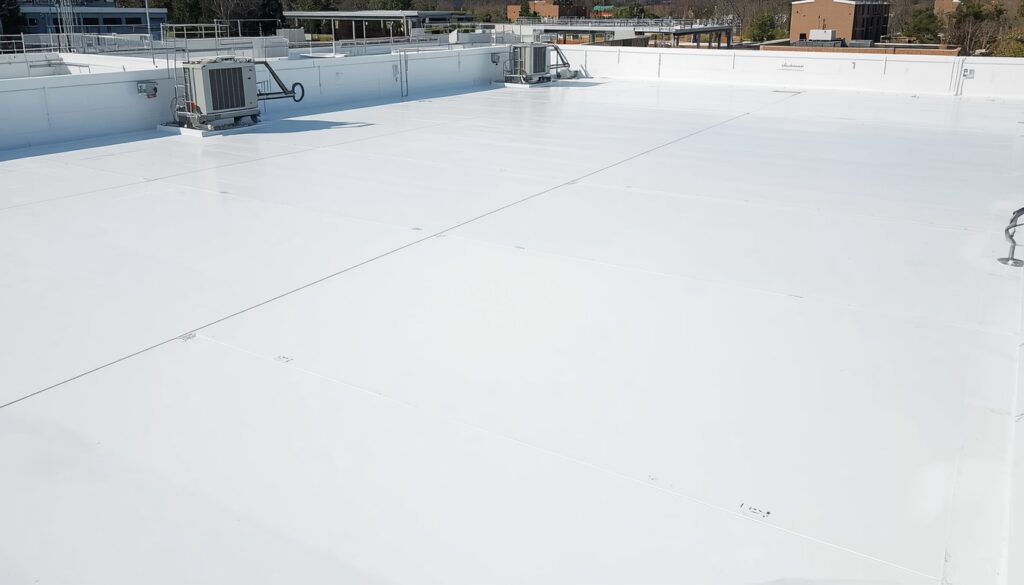
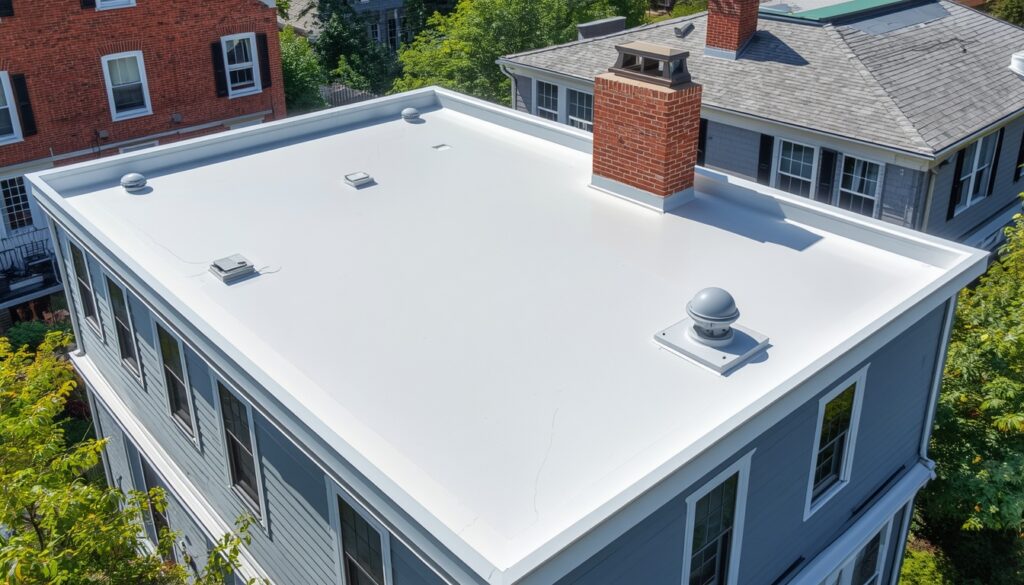
  • PVC roofing

TPO Roofing (Brief Overview)

  • heat-welded seams
  • lower upfront cost than PVC
  • performance depends heavily on installation

PVC Roofing (Long-Term Alternative)

PVC is increasingly used in Boston, especially for commercial buildings.

Key advantages:

1. Welded Seams Instead of Glue
Eliminates one of the main failure points of rubber roofs.

2. Better Resistance to Ponding Water
Performs well in flat roof conditions common in Massachusetts.

3. Strong Performance in Cold Climate
Handles freeze-thaw cycles effectively.

4. Longer Lifespan
Typically 20–30+ years.

5. Lower Long-Term Maintenance
Fewer repairs compared to aging rubber systems.

👉 Many property owners consider PVC after experiencing repeated rubber roof issues.

Real-World Insight from Boston Projects

At ID Flat Roof, we often see a pattern:

  • rubber roof installed → performs well initially
  • after 10–15 years → repairs begin
  • after multiple repairs → leaks become recurring
  • final step → system upgrade

👉 In many of these cases, upgrading to a more durable system reduces long-term costs.

Repair or Replace: What to Consider

If you currently have a rubber roof:

Repair may make sense if:

  • damage is localized
  • roof is relatively new
  • no recurring issues

Replacement may be better if:

  • leaks are frequent
  • seams are failing
  • roof is aging
  • repair costs are increasing

FAQ

Is rubber roofing good for Boston weather?
It can perform well, but may develop seam-related issues over time.

How long does a rubber roof last in Massachusetts?
Typically 15–25 years depending on installation and maintenance.

What is the main problem with rubber roofs?
Seam failure due to aging adhesive.

What is a good alternative to rubber roofing?
PVC roofing is often considered for better durability and long-term performance.

Conclusion

Rubber roofing remains a widely used and practical option in Boston — especially for projects with budget constraints.

However, its limitations — particularly seam durability and long-term maintenance — often become apparent over time.

For property owners planning long-term, exploring alternatives like PVC roofing can provide improved performance, fewer repairs, and greater reliability in Massachusetts conditions.

At ID Flat Roof, we help property owners evaluate their current system and choose the best path forward based on real conditions.

Know When to Repair — and When to Move On

If your rubber roof is showing its age or repeating the same problems, it might be time for a fresh perspective. Call ID Flat Roof for an honest assessment and a solution built for Boston’s climate.
    Your Name*

    City*

    Preferred Way to Contact You

    Your Phone*

    [tel* your-home-phone minlength:10 pattern "^\+?[\d\s\-\(\)]{10,}$" placeholder "+1 (555) 123-4567"]

    Your E-mail*

    Your Message (optional)

    PVC Roofing Contractors in Boston: How to Choose the Right Company

    Reading Time: 3 minutes

    Introduction

    Choosing the right contractor for a PVC flat roof in Boston is just as important as choosing the material itself.

    At ID Flat Roof, we’ve inspected and replaced many roofs that failed not because of the material — but because of poor installation.

    This guide explains how to evaluate PVC roofing contractors in Boston based on real-world experience, not marketing claims.

    At ID Flat Roof, we believe: “A great membrane means nothing without great installation — especially in New England.”

    Why Choosing the Right Contractor Matters

    PVC roofing is a high-performance system — but only when installed correctly.

    In Massachusetts conditions:

    • seams must be properly heat-welded
    • drainage must be correctly designed
    • details around penetrations must be precise

    👉 Even small mistakes can lead to leaks and premature failure.

    What Makes PVC Roofing Different

    Unlike rubber roofs, PVC relies on:

    • heat-welded seams (not glue)
    • precise installation techniques
    • specialized equipment

    👉 This means not every roofing contractor is qualified to install PVC correctly.

    7 Key Factors to Evaluate a PVC Roofing Contractor

    1. Experience with PVC Roofing (Not Just Flat Roofs)

    Many contractors install flat roofs — but not all specialize in PVC.

    Ask:

    • how many PVC projects have you completed?
    • do you focus on commercial flat roofs?

    👉 PVC requires different skills than rubber roofing.

    2. Knowledge of Boston & Massachusetts Conditions

    A good contractor understands local challenges:

    • freeze-thaw cycles
    • ponding water issues
    • building code requirements

    👉 Local expertise directly impacts roof performance.

    3. Installation Process (Not Just Price)

    A professional contractor should clearly explain:

    • how seams are welded
    • how drainage is handled
    • how problem areas are reinforced

    👉 If they can’t explain the process — that’s a red flag.

    In industrial areas like Framingham, where temperature swings and heavy equipment are the norm, we often see PVC systems fail not from material defects — but from installers who didn’t account for local stress factors.

    4. Inspection Before Quote

    Avoid contractors who give estimates without inspecting the roof.

    A proper process includes:

    • full inspection
    • condition assessment
    • clear scope of work

    👉 Every roof is different — guessing leads to problems.

    5. Warranty & System Quality

    Ask about:

    • material warranty
    • workmanship warranty
    • expected lifespan

    👉 A strong PVC system should last 20–30+ years.

    6. Previous Projects & Real Examples

    Look for:

    • case studies
    • before/after photos
    • similar commercial projects

    👉 Proven results matter more than promises.

    7. Focus on Long-Term Solutions

    Some contractors focus on:

    • lowest cost
    • quick installation

    The right contractor focuses on:

    • durability
    • leak prevention
    • long-term performance

    👉 This is especially important for commercial properties.

    Please Call ID Flat Roof
    +1 (978) 381-3838

    Red Flags to Avoid

    Be cautious if a contractor:

    • recommends only repairs without full evaluation
    • offers unusually low pricing
    • lacks PVC-specific experience
    • avoids detailed explanations
    • pushes quick decisions

    👉 These are common signs of poor-quality work.

    Questions You Should Ask Before Hiring

    • Do you specialize in PVC roofing?
    • How do you handle ponding water?
    • What is your installation process?
    • What warranties do you provide?
    • Can you show similar projects?

    👉 Clear answers = experienced contractor.

    Why Many Boston Property Owners Choose PVC

    When installed correctly, PVC offers:

    • superior leak resistance
    • strong welded seams
    • excellent performance in ponding water
    • long lifespan
    • lower maintenance costs

    👉 But all of this depends on proper installation.

    What to Expect from a Professional PVC Contractor

    At ID Flat Roof, our process includes:

    1. full roof inspection
    2. system evaluation
    3. clear recommendation
    4. detailed installation plan
    5. expert PVC installation

    👉 Our focus is long-term performance — not temporary fixes.

    FAQ

    How do I choose a PVC roofing contractor in Boston?
    Look for experience with PVC systems, local expertise, and a detailed inspection process.

    Is PVC roofing difficult to install?
    Yes, it requires specialized skills and proper heat-welding techniques.

    What happens if PVC is installed incorrectly?
    Improper installation can lead to seam failure, leaks, and reduced lifespan.

    How long should a PVC roof last?
    Typically 20–30+ years with proper installation.

    Conclusion

    Choosing the right PVC roofing contractor in Boston is critical to the success of your project.

    A high-quality PVC system can provide decades of reliable performance — but only when installed by experienced professionals.

    At ID Flat Roof, we focus on delivering long-term roofing solutions designed specifically for Massachusetts conditions.

    Don’t Just Hire a Contractor. Hire a Partner.

    If you’re looking for a team that knows PVC, understands Boston weather, and stands by their work — call ID Flat Roof for an honest conversation about your roof’s future.

      Your Name*

      City*

      Preferred Way to Contact You

      Your Phone*

      [tel* your-home-phone minlength:10 pattern "^\+?[\d\s\-\(\)]{10,}$" placeholder "+1 (555) 123-4567"]

      Your E-mail*

      Your Message (optional)

      Flat Roof Inspection in Boston: What Contractors Actually Check

      Reading Time: 3 minutes

      Introduction

      Flat roof inspections in Boston are not just a quick visual check — they require a detailed evaluation of the entire roofing system, especially given Massachusetts’ harsh weather conditions.

      At ID Flat Roof, we perform professional inspections across Boston and surrounding areas, and one thing is clear: most serious roof problems start long before they become visible leaks.

      This guide explains exactly what experienced contractors look for during a flat roof inspection — based on real field work.

      At ID Flat Roof, we say: “An inspection isn’t about finding problems — it’s about preventing them.”

      Why Flat Roof Inspections Are Critical in Boston

      Massachusetts climate puts constant stress on flat roofs:

      • freeze-thaw cycles
      • heavy snow and ice
      • frequent rain
      • ponding water

      👉 Without regular inspections, small issues quickly turn into expensive repairs.

      What a Professional Flat Roof Inspection Includes

      A proper inspection is not just looking at the surface — it’s a system-wide evaluation.

      1. Membrane Condition (Top Layer)

      The first thing contractors check is the roofing membrane.

      We look for:

      • cracks or splits
      • punctures
      • worn or thin areas
      • bubbling or blistering

      👉 Even small damage can lead to leaks over time.

      2. Seams and Joints (Critical Areas)

      Seams are one of the most common failure points.

      Rubber roofs:

      • glued seams may separate

      PVC roofs:

      • welded seams are checked for integrity

      👉 In Boston, many leaks originate at seams — not the main surface.

      3. Drainage System

      Drainage is one of the most important parts of a flat roof.

      Contractors inspect:

      • internal drains
      • scuppers
      • water flow paths

      We check for:

      • blockages
      • improper slope
      • standing water

      👉 Ponding water is one of the biggest causes of roof failure in Massachusetts.

      In areas like Medford, where older commercial buildings often have original low-slope designs, we frequently find that drainage — not the membrane itself — is the root cause of recurring leaks.

      4. Flashing and Penetrations

      These are areas around:

      • vents
      • HVAC units
      • edges
      • skylights

      We check:

      • sealing condition
      • cracks or gaps
      • loose materials

      👉 These are high-risk leak areas.

      5. Signs of Ponding Water

      Even if water is not currently visible, we look for:

      • staining patterns
      • dirt accumulation
      • uneven surfaces

      👉 These indicate long-term drainage issues.

      6. Structural and Insulation Issues

      A deeper inspection may include:

      • soft spots (indicating moisture below)
      • insulation damage
      • deck condition

      👉 Hidden moisture is one of the most expensive problems if ignored.

      7. Previous Repairs

      We evaluate:

      • patch quality
      • compatibility of materials
      • effectiveness of past fixes

      👉 Many roofs fail due to poor or temporary repairs.

      Please Call ID Flat Roof
      +1 (978) 381-3838

      What Most Property Owners Miss

      From real inspections in Boston:

      • small seam separation
      • minor drainage issues
      • early-stage membrane wear

      👉 These issues are easy to fix early — but expensive later.

      How Often Should You Inspect a Flat Roof?

      In Massachusetts:

      • at least once per year
      • after major storms
      • before and after winter

      👉 Regular inspections can extend roof life significantly.

      What Happens After the Inspection?

      At ID Flat Roof, we provide:

      1. full condition assessment
      2. photo documentation
      3. clear explanation of issues
      4. recommendation:
      • repair
      • maintenance
      • replacement (if needed)

      👉 No guesswork — just clear, actionable information.

      When an Inspection Leads to Replacement

      Sometimes inspection reveals:

      • widespread seam failure
      • trapped moisture
      • aging membrane
      • recurring leak patterns

      👉 In these cases, continuing repairs is not cost-effective.

      Why PVC Roofing Often Comes Up After Inspection

      Many inspections lead to the same conclusion:

      The existing system (often rubber roof) is failing structurally.

      PVC becomes a recommended upgrade because:

      • welded seams reduce leak risk
      • better performance under ponding water
      • longer lifespan
      • fewer future repairs

      👉 This is especially relevant for commercial buildings in Boston.

      FAQ

      What do contractors check during a flat roof inspection?
      They evaluate membrane condition, seams, drainage, flashing, structure, and signs of hidden moisture.

      How long does a flat roof inspection take?
      Typically 1–2 hours depending on roof size and complexity.

      How often should I inspect my flat roof in Boston?
      At least once per year and after major weather events.

      Can an inspection detect hidden leaks?
      Yes, professional inspections can identify moisture and early-stage damage.

      Conclusion

      A flat roof inspection is not just a routine check — it’s a critical step in preventing costly damage and extending the life of your roof.

      In Boston’s climate, early detection of problems can save thousands of dollars and avoid emergency situations.

      At ID Flat Roof, we provide detailed, honest inspections designed to give property owners real clarity — not just surface-level observations.

      See What’s Really Happening on Your Roof

      If you suspect hidden issues or just want peace of mind, call ID Flat Roof for a thorough, no-pressure inspection — built on real Massachusetts experience.

        Your Name*

        City*

        Preferred Way to Contact You

        Your Phone*

        [tel* your-home-phone minlength:10 pattern "^\+?[\d\s\-\(\)]{10,}$" placeholder "+1 (555) 123-4567"]

        Your E-mail*

        Your Message (optional)

        Request FREE Inspection & Estimate

          Your Name*

          City*

          Preferred Way to Contact You

          Your Phone*

          [tel* your-home-phone minlength:10 pattern "^\+?[\d\s\-\(\)]{10,}$" placeholder "+1 (555) 123-4567"]

          Your E-mail*

          Your Message (optional)

          ×
          Feedback Form

            Your Name

            City*

            Preferred Way to Contact You

            Your Phone

            Your E-mail*

            Your Message (optional)

            This site is protected by reCAPTCHA and the Google
            Privacy Policy and Terms of Service apply.

            ×
            Test

            ×