




Rubber Roof Boston: Pros, Cons & Alternatives
Reading Time: 4 minutes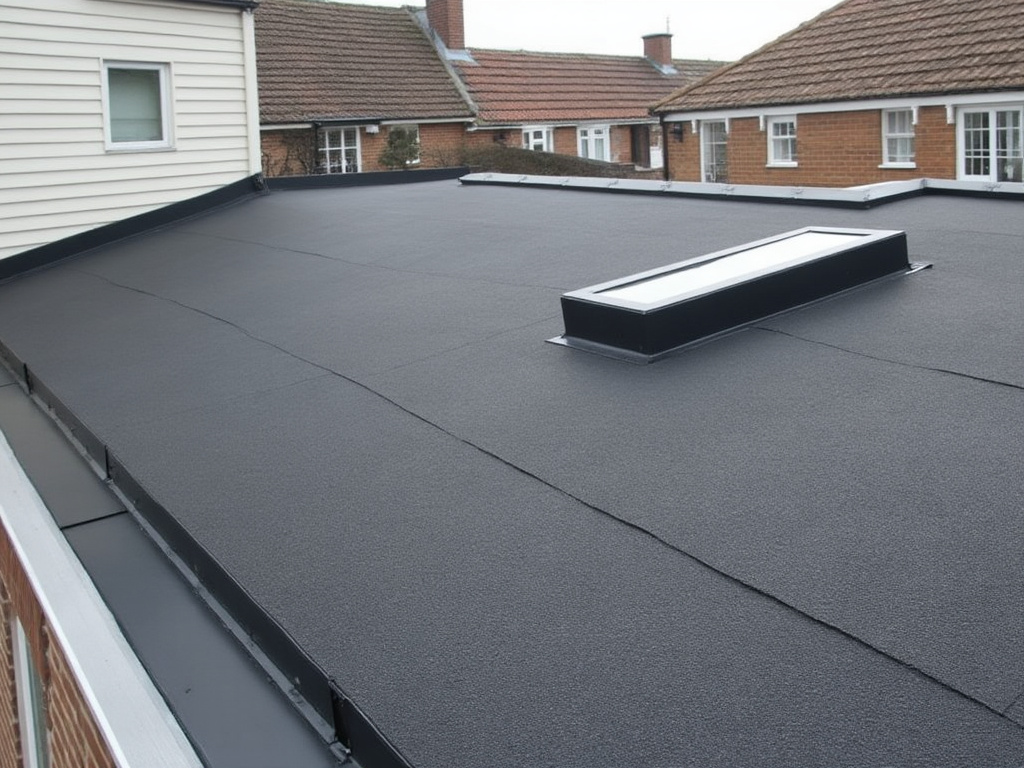
Introduction
Rubber roofing (EPDM) has been widely used in Boston and across Massachusetts for decades. It’s a familiar and cost-effective option — but like any roofing system, it has limitations.
At ID Flat Roof, we regularly inspect, repair, and replace rubber roofs. In many cases, they perform well — but in others, property owners face recurring issues that lead them to consider alternatives.
This guide provides a clear, experience-based overview of:
- how rubber roofs perform in Boston
- key advantages and drawbacks
- when they make sense
- what alternatives to consider in 2026
At ID Flat Roof, we’ve learned this after years in the field: “A rubber roof isn’t bad — it just has an expiration date, especially in New England.”
What Is a Rubber Roof?
A rubber roof (EPDM) is a synthetic membrane commonly used on flat and low-slope roofs.
Key characteristics:
- flexible material
- installed in large sheets
- seams are glued or taped
- widely used in commercial and residential properties
👉 It’s known for simplicity and relatively low upfront cost.
How Rubber Roofs Perform in Boston
Massachusetts weather creates a demanding environment:
- freeze-thaw cycles
- snow and ice accumulation
- heavy rain
- temperature fluctuations
👉 Rubber roofs can handle these conditions — but performance depends heavily on installation quality and maintenance.
Pros of Rubber Roofing
1. Lower Upfront Cost
Rubber roofing is typically more affordable to install compared to other systems.
2. Flexibility
The material expands and contracts with temperature changes, reducing immediate stress.
3. Widely Available
Most contractors are familiar with rubber roof installation and repairs.
4. Proven Track Record
EPDM has been used for decades and is a known, established system.
Cons of Rubber Roofing
1. Seam Vulnerability
Rubber roofs rely on glued seams.
Over time:
- adhesive weakens
- seams separate
- leaks develop
👉 This is one of the most common issues we see in Boston.
2. Performance in Ponding Water
Standing water can accelerate wear and increase leak risk.
3. Frequent Repairs Over Time
As the roof ages:
- seams fail
- patches increase
- leaks become recurring
4. Shorter Lifespan Compared to Some Alternatives
Typical lifespan:
- 15–25 years
👉 Real-world performance varies based on conditions and maintenance.
5. Sensitivity to Installation Quality
Improper installation often leads to early problems.
When a Rubber Roof Makes Sense
Rubber roofing can still be a good option if:
- budget is limited
- building is small or simple
- long-term ownership is not a priority
- drainage is well-designed
👉 Not every project requires a premium system.
+1 (978) 381-3838
When Rubber Roofing Becomes a Problem
From real projects in Boston, issues often appear when:
- leaks repeat over time
- seams begin to fail across the roof
- ponding water is present
- repairs become frequent
- the roof is 15–25+ years old
👉 At this stage, continuing repairs often becomes inefficient.
In older commercial zones like Somerville, where many buildings have original EPDM roofs from the 1990s, we frequently see the same pattern: the membrane looks fine, but the glued seams have quietly given up — and that’s when the leaks start.
Alternatives to Rubber Roofing in 2026
When replacement is needed, property owners typically consider:
- TPO roofing
- PVC roofing
TPO Roofing (Brief Overview)
- heat-welded seams
- lower upfront cost than PVC
- performance depends heavily on installation
PVC Roofing (Long-Term Alternative)
PVC is increasingly used in Boston, especially for commercial buildings.
Key advantages:
1. Welded Seams Instead of Glue
Eliminates one of the main failure points of rubber roofs.
2. Better Resistance to Ponding Water
Performs well in flat roof conditions common in Massachusetts.
3. Strong Performance in Cold Climate
Handles freeze-thaw cycles effectively.
4. Longer Lifespan
Typically 20–30+ years.
5. Lower Long-Term Maintenance
Fewer repairs compared to aging rubber systems.
👉 Many property owners consider PVC after experiencing repeated rubber roof issues.
Real-World Insight from Boston Projects
At ID Flat Roof, we often see a pattern:
- rubber roof installed → performs well initially
- after 10–15 years → repairs begin
- after multiple repairs → leaks become recurring
- final step → system upgrade
👉 In many of these cases, upgrading to a more durable system reduces long-term costs.
Repair or Replace: What to Consider
If you currently have a rubber roof:
Repair may make sense if:
- damage is localized
- roof is relatively new
- no recurring issues
Replacement may be better if:
- leaks are frequent
- seams are failing
- roof is aging
- repair costs are increasing
FAQ
Is rubber roofing good for Boston weather?
It can perform well, but may develop seam-related issues over time.
How long does a rubber roof last in Massachusetts?
Typically 15–25 years depending on installation and maintenance.
What is the main problem with rubber roofs?
Seam failure due to aging adhesive.
What is a good alternative to rubber roofing?
PVC roofing is often considered for better durability and long-term performance.
Conclusion
Rubber roofing remains a widely used and practical option in Boston — especially for projects with budget constraints.
However, its limitations — particularly seam durability and long-term maintenance — often become apparent over time.
For property owners planning long-term, exploring alternatives like PVC roofing can provide improved performance, fewer repairs, and greater reliability in Massachusetts conditions.
At ID Flat Roof, we help property owners evaluate their current system and choose the best path forward based on real conditions.
Know When to Repair — and When to Move On
If your rubber roof is showing its age or repeating the same problems, it might be time for a fresh perspective. Call ID Flat Roof for an honest assessment and a solution built for Boston’s climate.

Denis is the driving force behind ID Flat Roof, a leading company in Boston specializing in flat roof repair and installation for over 20 years.
Expertise:
Denis excels in PVC, TPO, EPDM, and rubber roofing. His meticulous approach ensures quality and customer satisfaction.
Innovation:
Denis incorporates cutting-edge solutions like skylights and solar PV roofing.