




Rubber Roof vs PVC Cost Comparison (Boston Market 2026 Guide)
Reading Time: 3 minutes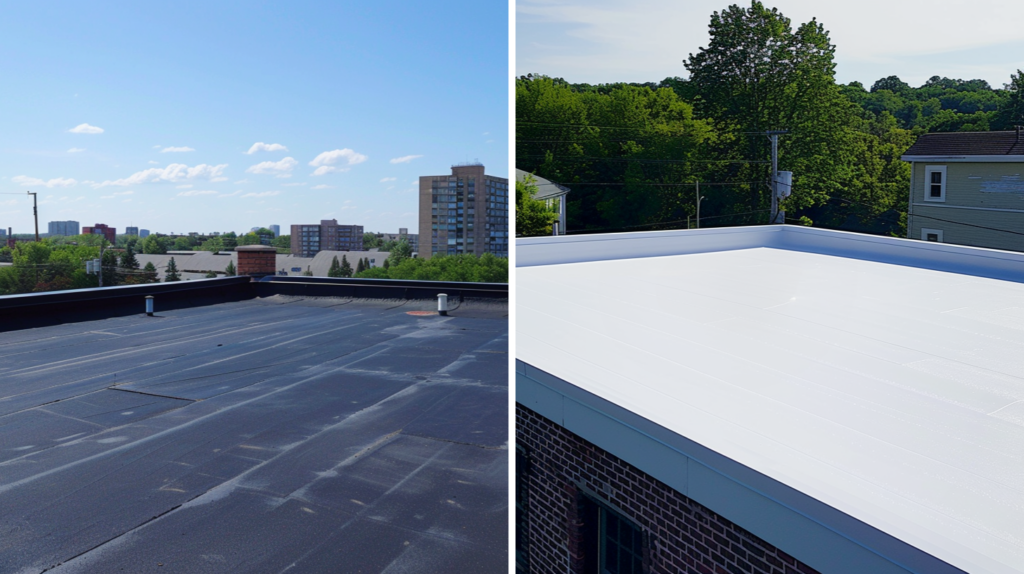
Introduction
When comparing flat roofing systems in Boston, one of the most common questions is:
“Is a rubber roof cheaper than PVC — and is it worth it?”
The short answer: rubber (EPDM) is usually cheaper upfront, but PVC often delivers better long-term value.
At ID Flat Roof, we help property owners look beyond initial pricing and understand the true cost of ownership over time.
Quick Answer
Rubber roof vs PVC cost in Boston:
- Rubber (EPDM): lower upfront cost
- PVC: higher upfront cost, lower long-term maintenance
👉 Over time, PVC is often more cost-effective due to durability and fewer repairs.
When we walk onto a roof with competing quotes in hand, we don’t start by comparing material prices. We press a putty knife along the existing seams and check for micro-lifting around the drain collars. In Boston’s freeze-thaw cycles, a rubber roof might look budget-friendly in July, but by March, those adhesive bonds quietly separate under ice pressure. At ID Flat Roof, we map that seasonal stress before we run the numbers — because the real cost isn’t what’s on the spreadsheet. It’s what fails when the temperature drops.
Upfront Cost Comparison
Rubber Roof (EPDM)
- lower cost per square foot
- widely used traditional system
- faster initial installation
👉 Attractive for short-term budgets.
PVC Roofing
- higher initial cost
- requires specialized installation
- premium system pricing
👉 Higher investment upfront.
+1 (978) 381-3838
What Drives the Cost Difference
1. Installation Method
- rubber roofs use adhesive seams
- PVC uses heat-welded seams
👉 Welded seams are stronger but require more skilled labor.
2. Material Performance
- rubber is flexible but less resistant to standing water
- PVC is highly resistant to moisture and ponding
3. System Complexity
PVC systems often include:
- improved insulation integration
- better drainage planning
- more detailed installation
👉 This increases upfront cost but improves performance.
Long-Term Cost Comparison
Rubber Roof (EPDM)
Over time, owners often face:
- seam maintenance
- patch repairs
- increased leak risk
- shorter effective lifespan
👉 Maintenance costs add up.
PVC Roofing
Long-term advantages include:
- stronger seams (less failure risk)
- fewer repairs
- better resistance to water and weather
- longer lifespan (20–30+ years)
👉 Lower total cost over time.
Maintenance Cost Comparison
Rubber Roof:
- more frequent inspections needed
- seam re-sealing
- patch repairs over time
PVC Roof:
- minimal seam maintenance
- better long-term stability
- fewer recurring issues
Why Boston Climate Changes the Equation
In Boston, roofing systems face:
- heavy snow loads
- freeze-thaw cycles
- ice buildup
- frequent moisture exposure
👉 These conditions tend to accelerate wear on rubber roofs, especially at seams.
PVC systems perform better in:
- standing water conditions
- temperature fluctuations
- long-term durability
Real Cost Perspective: Short-Term vs Long-Term
Choosing Rubber (Lower Upfront Cost)
- saves money initially
- may require more repairs
- higher lifetime maintenance cost
Choosing PVC (Higher Upfront Investment)
- higher initial cost
- fewer repairs
- longer service life
- better ROI
👉 Total cost of ownership is often lower with PVC.
During site evaluations, we track repair frequency against actual weather events, not just calendar years. If a building has had three rubber roof patches in two winters, we shift the conversation from “repair cost” to “system lifespan.” The decision to recommend PVC isn’t about upselling — it’s about watching how heat-welded seams hold up when coastal humidity and rapid temperature swings hit. At ID Flat Roof, we don’t guess which material saves money. We measure which one survives the next nor’easter without sending a crew back out.
When Rubber Roofing Makes Sense
- short-term ownership plans
- limited upfront budget
- temporary solutions
When PVC Is the Better Investment
- long-term ownership
- commercial buildings
- recurring leak problems
- desire to reduce maintenance costs
Hidden Costs to Consider
- repair frequency
- leak-related interior damage
- energy efficiency differences
- disruption to tenants or operations
👉 These often outweigh initial savings.
Common Mistakes in Cost Comparison
- comparing only material price
- ignoring maintenance costs
- underestimating repair frequency
- not considering lifespan
👉 True comparison must include total lifecycle cost.
FAQ
Is rubber roofing cheaper than PVC?
Yes, rubber roofs usually have lower upfront cost.
Is PVC roofing worth the extra cost?
In many cases, yes — due to lower maintenance and longer lifespan.
Which roof lasts longer: rubber or PVC?
PVC typically lasts longer and performs better in harsh climates.
Why is PVC more expensive?
Because of material quality and installation method (heat-welded seams).
Conclusion
While rubber roofing offers a lower initial price, it often comes with higher maintenance costs and shorter lifespan.
PVC roofing requires a higher upfront investment, but delivers greater durability, fewer repairs, and better long-term value — especially in Boston’s demanding climate.
At ID Flat Roof, we help property owners choose roofing systems based on long-term performance, not just initial cost.
Compare What Actually Lasts — Not Just What Costs Less Today
If you’re weighing rubber vs PVC for your building, call ID Flat Roof for a straightforward breakdown of how each system will perform through Boston’s actual seasonal cycles — not just on a spec sheet.

Denis is the driving force behind ID Flat Roof, a leading company in Boston specializing in flat roof repair and installation for over 20 years.
Expertise:
Denis excels in PVC, TPO, EPDM, and rubber roofing. His meticulous approach ensures quality and customer satisfaction.
Innovation:
Denis incorporates cutting-edge solutions like skylights and solar PV roofing.