




Real Case: Flat Roof Leak in Boston and How We Fixed It
Reading Time: 3 minutes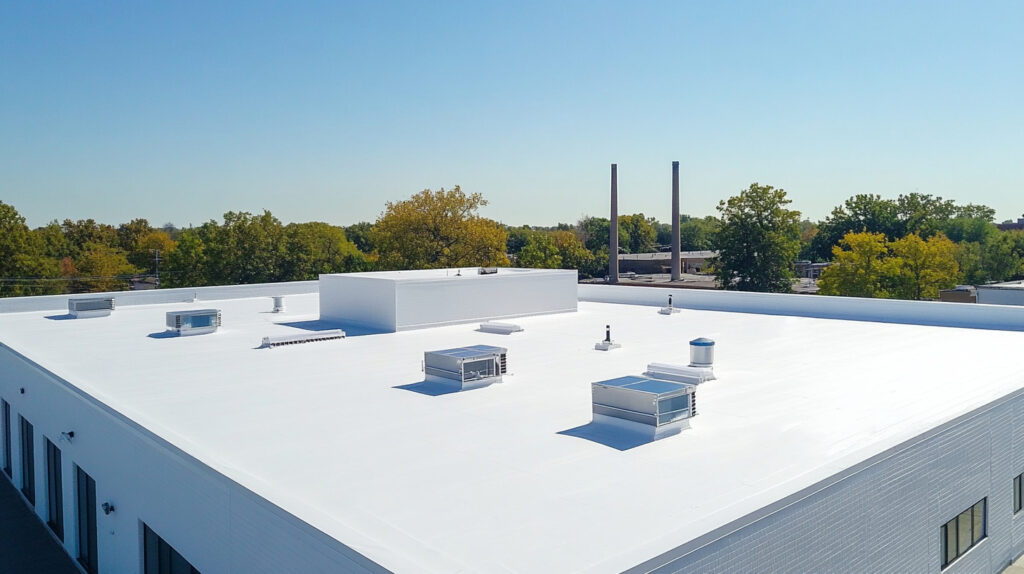
Introduction
Flat roof leaks in Boston are rarely accidental — in most cases it is the result of accumulated problems: worn seams, standing water, installation errors.
At ID Flat Roof, we recently completed a commercial flat roof project in the Boston area where recurring leaks had been “repaired” multiple times — but never properly solved.
This case shows exactly:
- what caused the leak
- why previous repairs failed
- how we fixed it permanently
- why upgrading to PVC made the most sense
As we often tell clients at ID Flat Roof: “If you’ve patched the same roof twice, you’re not fixing it — you’re funding the next emergency.”
Project Overview
Location: Boston, MA
Property Type: Commercial building
Roof Type: Rubber roof (existing system)
Main Issue: Multiple recurring leaks
The owner had already spent thousands on repairs over several years, but the problem kept coming back — especially after heavy rain and snow melt.
Initial Problem
When we arrived, the situation looked typical for Boston:
- visible water damage inside the building
- multiple patched areas on the roof
- standing water near drains
- aging membrane
👉 The key issue: the roof wasn’t failing in just one place — it was failing system-wide.
Inspection & Diagnosis
Our inspection revealed several critical problems:
1. Seam Failure
The rubber roof had glued seams that were starting to separate.
2. Ponding Water
Improper drainage caused water to sit on the roof for extended periods.
3. Trapped Moisture
Previous repairs sealed over wet areas instead of fixing them.
4. Repeated Patch Repairs
Multiple temporary fixes weakened the overall system.
👉 This is a common scenario in Massachusetts — patching symptoms instead of solving the root cause.
+1 (978) 381-3838
Why Previous Repairs Failed
The building owner had hired different contractors over time.
The typical approach was:
- locate visible leak
- apply patch
- seal the area
The problem?
- no full inspection
- no moisture detection
- no system-level solution
👉 Result: leaks returned again and again.
Our Solution
After evaluation, we recommended a full system upgrade to PVC roofing.
Step 1: Full Roof Assessment
We mapped all weak points and moisture-affected areas.
Step 2: Removal of Damaged Sections
Old membrane and compromised areas were removed.
Step 3: Drainage Improvement
We corrected slope issues to reduce ponding water.
Step 4: PVC Roofing Installation
We installed a high-performance PVC membrane with heat-welded seams.
Why We Chose PVC Roofing
For this project, PVC was the best long-term solution.
Key reasons:
- welded seams eliminate common leak points
- superior resistance to standing water
- strong performance in Boston’s freeze-thaw cycles
- long lifespan with minimal maintenance
👉In our experience, buildings with recurring leaks almost always benefit from moving away from glued systems. As our crew says: “Welded seams don’t lie — they hold.”
Final Result
After completion:
- leaks were fully eliminated
- drainage improved significantly
- maintenance requirements reduced
- long-term reliability ensured
The owner moved from constant repair costs to a stable, predictable roofing system.
Key Takeaways for Property Owners
This case highlights several important lessons:
- recurring leaks usually mean deeper system issues
- patch repairs are rarely a long-term solution
- drainage problems must be addressed
- material choice matters — especially in Massachusetts
👉 Most importantly: early investment in the right system saves money over time.
When You Should Consider a Similar Upgrade
You may be in a similar situation if:
- your roof leaks repeatedly
- repairs don’t last
- water pools on the roof
- the system is 15–25+ years old
Why Property Owners Choose ID Flat Roof
At ID Flat Roof, we focus on long-term solutions — not temporary fixes.
Our approach:
- full diagnostics
- honest recommendations
- expert installation
- systems designed for Massachusetts weather
We’ve learned from two decades in the field: the best roof is the one you forget about.
FAQ
Why do flat roof leaks keep coming back?
Because the root cause is not addressed — often due to poor drainage or failing seams.
Is it better to repair or replace a leaking flat roof?
If leaks are recurring, replacement is usually more cost-effective.
Why is PVC better than rubber roofing?
PVC has welded seams and better resistance to water, making it more reliable long-term.
Conclusion
This Boston project is a clear example of how repeated repairs can cost more than a proper long-term solution.
By upgrading to PVC roofing, the property owner eliminated ongoing issues and gained a reliable system built for Massachusetts conditions.
Stop Patching. Start Solving.
If your flat roof keeps leaking, it’s not bad luck — it’s a system failure. Call ID Flat Roof for an honest assessment and a solution that lasts.

Denis is the driving force behind ID Flat Roof, a leading company in Boston specializing in flat roof repair and installation for over 20 years.
Expertise:
Denis excels in PVC, TPO, EPDM, and rubber roofing. His meticulous approach ensures quality and customer satisfaction.
Innovation:
Denis incorporates cutting-edge solutions like skylights and solar PV roofing.