




Commercial Roof Maintenance Guide: Inspections, Repairs & Planning
Reading Time: 7 minutesCommercial roof maintenance helps property owners and managers track roof conditions, identify developing problems, document previous repairs, and plan future roofing work.
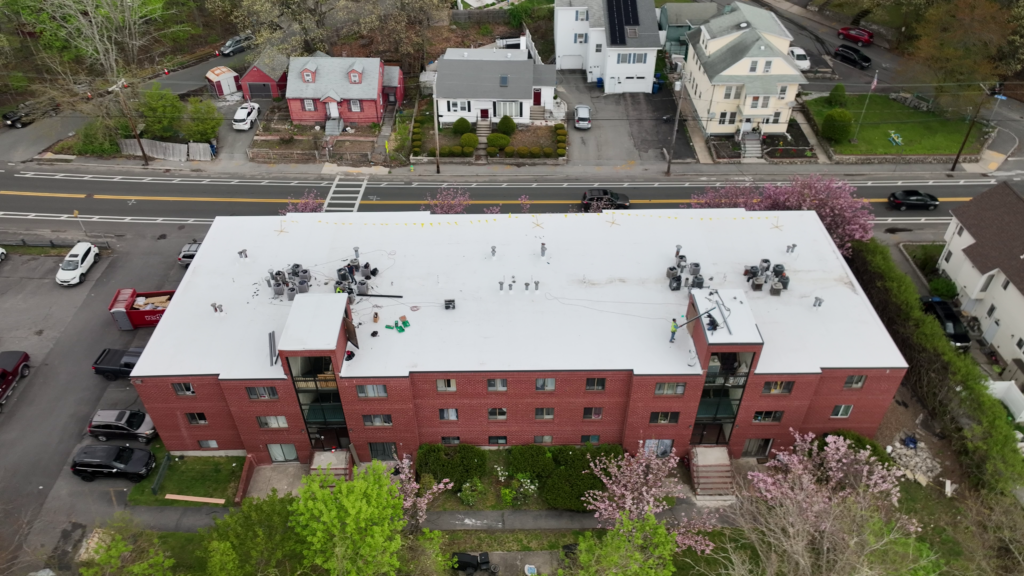
A maintenance program should reflect the actual roofing system, building use, roof age, previous repair history, rooftop equipment, drainage conditions, manufacturer requirements, and exposure to severe weather.
This guide explains what to monitor on a commercial flat roof, how to organize inspections and records, and when a condition may require professional repair or further investigation.
Why Commercial Roof Maintenance Matters
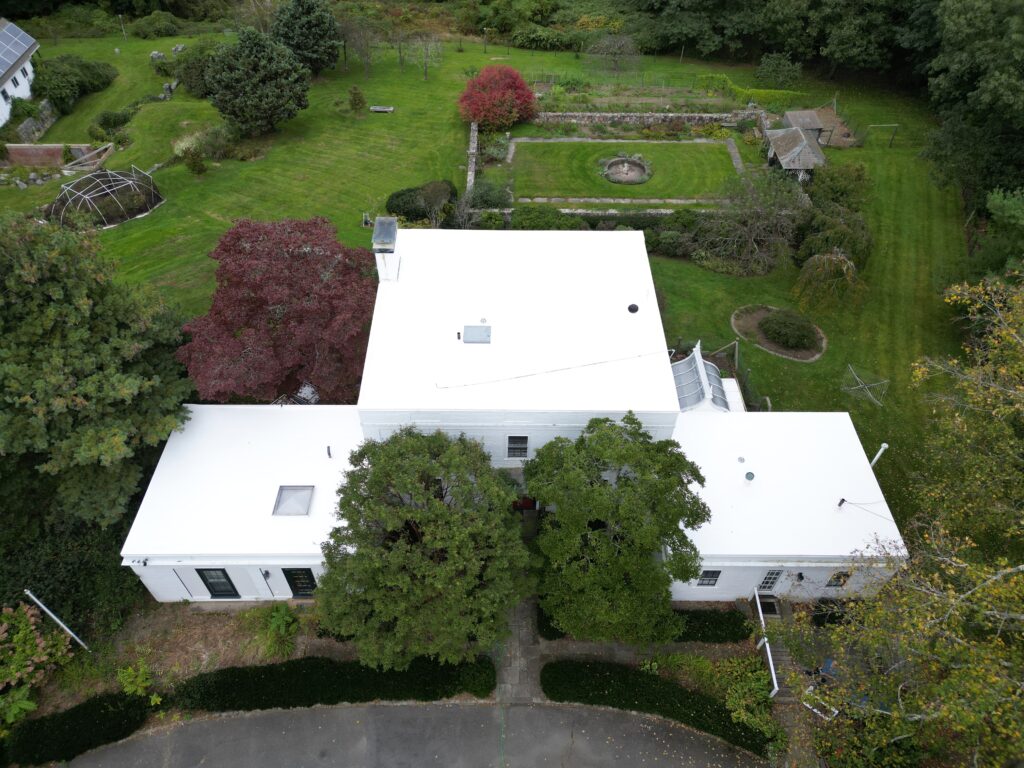
Commercial roofs contain multiple components that can change over time. Membrane seams, flashing, drains, penetrations, rooftop equipment, previous repair areas, and exposed roof surfaces may all require periodic observation.
Maintenance does not guarantee that a roof will never leak or require replacement. Its purpose is to create a structured way to monitor conditions and respond when something changes.
Good documentation can also help property managers distinguish between a new problem and a condition that has already been inspected or repaired.
Signs a Commercial Roof May Need Attention
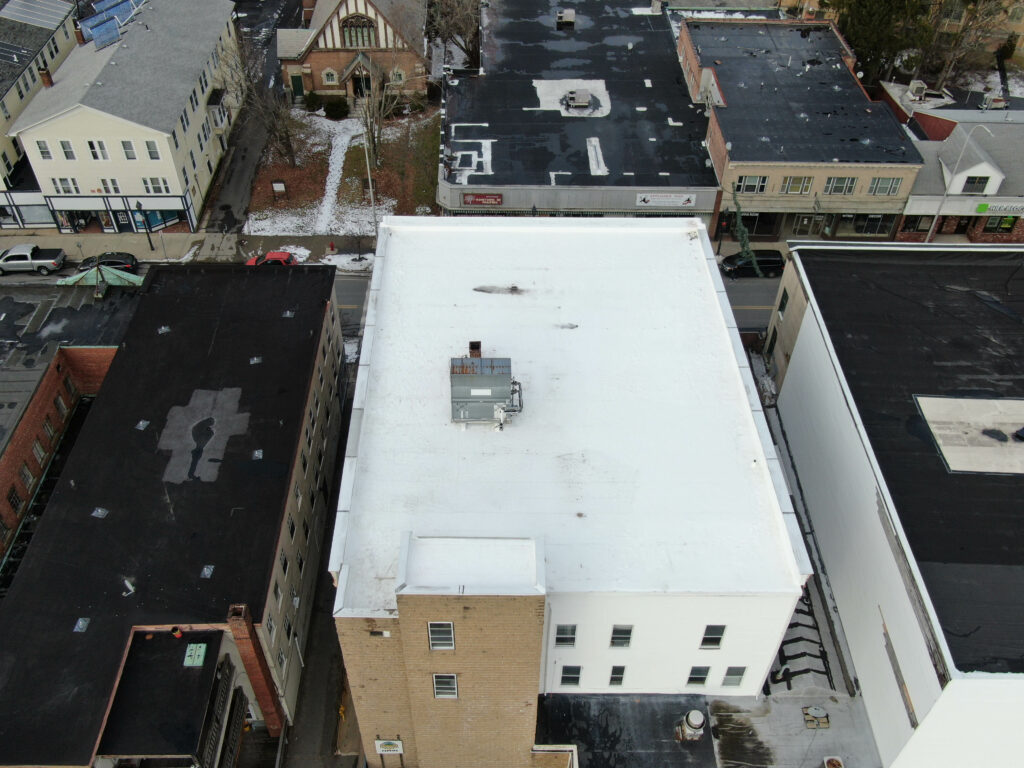
Some roof problems first appear on the roof surface, while others become noticeable inside the building.
- active or recurring water entry
- water stains or damp areas inside the building
- open or separated membrane seams
- punctures, cracks, blisters, or surface damage
- deteriorated flashing
- damage around penetrations or rooftop equipment
- blocked or damaged drainage components
- localized ponding water
- previous repair areas beginning to deteriorate
- changes noticed after storms or rooftop construction activity
The visible location of water inside a building does not always identify the exact point where water entered the roofing system. Leak investigation may require examination of surrounding roof areas and details.
How to Build a Commercial Roof Maintenance Plan
A useful maintenance plan starts with basic information about the existing roof.
Property records should identify the roofing system when known, installation or replacement history, previous repairs, warranty documents, inspection reports, roof plans, drainage information, and significant rooftop modifications.
The maintenance plan can then be adjusted according to the building and roof rather than applying the same schedule to every property.
Know the Roofing System
PVC, TPO, EPDM, modified bitumen, and built-up roofing systems can have different seams, flashing details, repair materials, and maintenance considerations.
If the existing roofing system is unknown, identifying it can make future inspections and repair planning more useful.
For a comparison of common commercial flat roofing systems, see our Commercial Roofing Systems Guide.
Track Rooftop Equipment and Penetrations
HVAC units, pipes, vents, curbs, supports, electrical equipment, and other penetrations create transitions in the roofing system that should be included in roof records and inspections.
When another contractor performs work on rooftop equipment, it can also be useful to document what work occurred and whether the roofing membrane or flashing was affected.
Keep Inspection and Repair Records
Useful maintenance records may include dated photographs, inspection notes, leak locations, completed repair scopes, invoices, warranty information, roof plans, and recommendations for future monitoring.
Consistent records make it easier to see whether a roof condition is stable, worsening, recurring, or already addressed.
When Should a Commercial Roof Be Inspected?
There is no single inspection frequency that applies to every commercial roof.
The appropriate schedule can depend on the roofing system, roof age, manufacturer requirements, building use, previous leak and repair history, rooftop traffic, environmental exposure, and property-specific risk factors.
An additional inspection may also be appropriate after a significant storm, known rooftop damage, construction activity, equipment replacement, or a newly reported leak.
The goal is to establish a repeatable inspection process appropriate for the building rather than relying on a universal calendar rule.
Seasonal Considerations for Massachusetts Commercial Roofs
Massachusetts roofs experience changing conditions throughout the year, including rain, snow, freeze-thaw cycles, wind, summer heat, and falling debris.
Winter Conditions
Winter observations may include drainage conditions, ice-related issues, snow accumulation, visible membrane damage, and interior signs of water entry.
Snow and ice conditions should be evaluated with appropriate attention to roof access, structural considerations, and worker safety. Property owners should avoid treating snow removal as a routine DIY roof-maintenance task.
Spring Conditions
After winter weather, property managers may review drains, flashing, membrane areas, previous repairs, and interior spaces for conditions that became visible during snowmelt or seasonal rain.
Summer Conditions
Summer roof observations may focus on membrane condition, rooftop equipment, penetrations, drainage, and any areas where previous repairs or surface changes are becoming visible.
Fall Conditions
Leaves and other debris can affect drains, scuppers, gutters, and roof surfaces. Before colder weather, drainage areas and known roof concerns can be reviewed and documented.
Commercial Roof Inspection Checklist
A commercial roof inspection should reflect the actual roofing system and building, but the following areas are commonly reviewed:
- general membrane condition
- seams and previous repair areas
- flashing and perimeter details
- roof penetrations
- HVAC curbs and other rooftop equipment
- drains, scuppers, gutters, and downspouts where applicable
- areas of localized ponding
- punctures, blisters, cracks, or surface damage
- debris or objects left on the roof
- changes around rooftop equipment or recent construction
- interior water stains or moisture observations
- photographs and written notes of findings
Roof access can involve fall hazards and other risks. Detailed rooftop inspections should be carried out by people qualified and equipped to access the roof safely.
Drainage Maintenance
Commercial flat roofs depend on drainage components to move water away from the roofing surface.
Depending on the building, the drainage system may include roof drains, scuppers, gutters, downspouts, tapered insulation, or other slope and drainage details.
Debris, damaged components, changes around drains, or other obstructions can affect how water moves across the roof. Drainage observations should therefore be part of routine roof documentation.
Common Findings During Commercial Roof Maintenance
Maintenance inspections may identify conditions that require monitoring, cleaning, repair, or additional investigation.
Open Seams and Membrane Damage
Separated seams, punctures, cracks, or other membrane damage should be evaluated according to the existing roofing system. PVC, TPO, EPDM, modified bitumen, and built-up roofs require different compatible repair methods.
Flashing Problems
Flashing around walls, penetrations, curbs, edges, and other transitions can become a source of water entry when it deteriorates or separates from surrounding components.
Localized Ponding Water
Water remaining on part of the roof may justify review of drainage conditions, roof slope, drain performance, membrane condition, or changes to the roof assembly.
Recurring Leak Areas
A leak that repeatedly returns after previous repairs may require broader investigation instead of another repair to the same visible symptom.
When Maintenance Becomes a Repair Project
Maintenance identifies and documents roof conditions, but some findings require a defined repair scope.
A repair contractor may need to identify the existing roofing system, investigate the source of the problem, evaluate surrounding roof areas, select compatible repair materials, and document what work will be performed.
For more detail about that process, see our Commercial Roof Repair Service Guide.
When Maintenance or Localized Repair May Not Be Enough
Routine maintenance cannot correct every roofing condition.
A larger project may need to be considered when deterioration is widespread, leaks repeatedly return, numerous previous repairs are failing, insulation or roof decking is affected, or the overall roofing system is no longer suitable for continued localized repair.
The decision between continued repair and a larger roofing project should follow an evaluation of the actual roof condition.
Budgeting and Planning for Commercial Roof Maintenance
Maintenance planning is easier when roofing expenses are documented instead of treated only as unexpected events.
A property manager can track inspection costs, completed repairs, recurring leak areas, drainage work, rooftop modifications, and recommendations for future projects.
These records can help with annual property planning and make it easier to understand whether maintenance activity is remaining stable or whether the roof is beginning to require increasingly significant work.
What If the Commercial Roof Is Actively Leaking?
An active leak is different from routine maintenance. Urgent attention may be appropriate when water is currently entering occupied areas, affecting equipment or interior materials, or when storm damage has exposed part of the roofing system.
The immediate objective may be temporary leak control or stabilization. A permanent repair scope can then be determined once the roof and surrounding conditions can be properly evaluated.
For an active commercial leak, visit our Commercial Emergency Roof Repair page.
When to Contact a Commercial Roofing Contractor
A commercial roofing contractor may be appropriate when the roof condition cannot be evaluated safely, the source of a leak is unclear, repairs keep recurring, membrane or flashing damage is visible, drainage conditions require investigation, or the property is moving from maintenance into a repair or replacement project.
For planned commercial roof inspection, repair, replacement, installation, or maintenance work in Massachusetts, visit our Commercial Roofing Services in Massachusetts page.
Explore More Flat Roof Insights
Planning a Flat Roof Replacement in Boston: Cost Factors to Review
Preventing Leaks on Rubber Roofs (2026 Guide)
Why Cheap Roofing Quotes Can Cost More Later (2026 Guide)
Red Flags When Hiring a Roofing Contractor (2026 Guide)
How to Prepare Your Property for Roof Work (2026 Guide)
What to Expect During a Commercial Roofing Project (2026 Guide)
Summary
Commercial roof maintenance should be organized around the actual building and roofing system. Inspections, photographs, repair records, drainage observations, warranty information, and rooftop-work history create a clearer picture of how roof conditions change over time.
Maintenance can identify developing problems, but it does not replace professional repair or replacement when roof conditions require a larger scope of work.
For commercial roofing systems and material selection, see our Commercial Roofing Systems Guide. For planned roofing work, use our Commercial Roofing Services page.
Frequently Asked Questions
Inspection frequency depends on the roofing system, roof age, building use, manufacturer requirements, previous repair history, rooftop activity, and exposure to severe weather. Additional inspections may also be appropriate after storms, rooftop construction, known damage, or a newly reported leak.
An inspection may include membrane condition, seams, flashing, penetrations, rooftop equipment, drains, previous repairs, ponding areas, visible damage, interior signs of water entry, and written or photographic documentation of findings.
Inspection reports, photographs, repair records, leak history, roof plans, and warranty information help property managers understand how roof conditions change and whether a problem is new, recurring, or previously addressed.
No. Maintenance can help identify developing conditions and organize roof care, but unexpected damage, severe weather, aging components, installation problems, or hidden conditions can still result in leaks or require repair.
Professional repair evaluation may be appropriate when there is an active or recurring leak, visible membrane or flashing damage, problems around drains or penetrations, repeated failure of previous repairs, or a condition that cannot be safely or clearly evaluated through routine maintenance.

Denis is the driving force behind ID Flat Roof, a leading company in Boston specializing in flat roof repair and installation for over 20 years.
Expertise:
Denis excels in PVC, TPO, EPDM, and rubber roofing. His meticulous approach ensures quality and customer satisfaction.
Innovation:
Denis incorporates cutting-edge solutions like skylights and solar PV roofing.