




Flat Roof Leak Repair: From Leak Detection to Permanent Repair
Reading Time: 7 minutesOnce a flat roof leak has been identified, the next step is to determine what should happen before, during, and after the repair. The visible water inside a building may be only one part of the problem, and a permanent repair should address the actual point of entry and the condition of the surrounding roofing system.
In some situations, the first objective is temporary leak control or stabilization. A permanent repair can then be planned after the roof, membrane, flashing, drainage, penetrations, and surrounding areas are properly evaluated.
This guide explains the flat roof leak repair process from initial response through diagnosis, repair planning, permanent work, and post-repair documentation.
Key Takeaways
- An interior leak location does not always identify the exact point where water enters the roof.
- Temporary leak control and permanent roof repair are different stages of the process.
- A permanent repair should use materials and methods compatible with the existing roofing system.
- Recurring leaks may require broader investigation instead of repeating the same localized repair.
- Inspection notes, photographs, repair locations, materials, and applicable warranty information should be retained after the work is completed.
First Response to a Flat Roof Leak
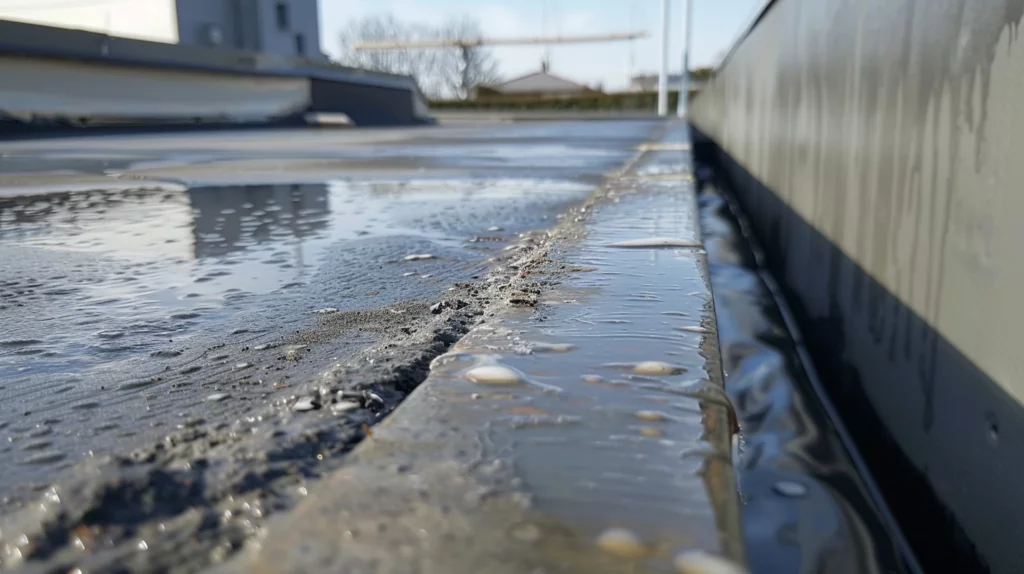
When water is entering a building, the immediate priority is limiting interior damage and determining whether the situation requires urgent roofing assistance.
Property owners and managers can document where water is appearing, when the leak began, current weather conditions, affected rooms or equipment, and any known history of previous roof repairs.
These observations can be useful later because the interior location of water may not be directly below the exterior leak source.
Signs of an Active or Recent Roof Leak
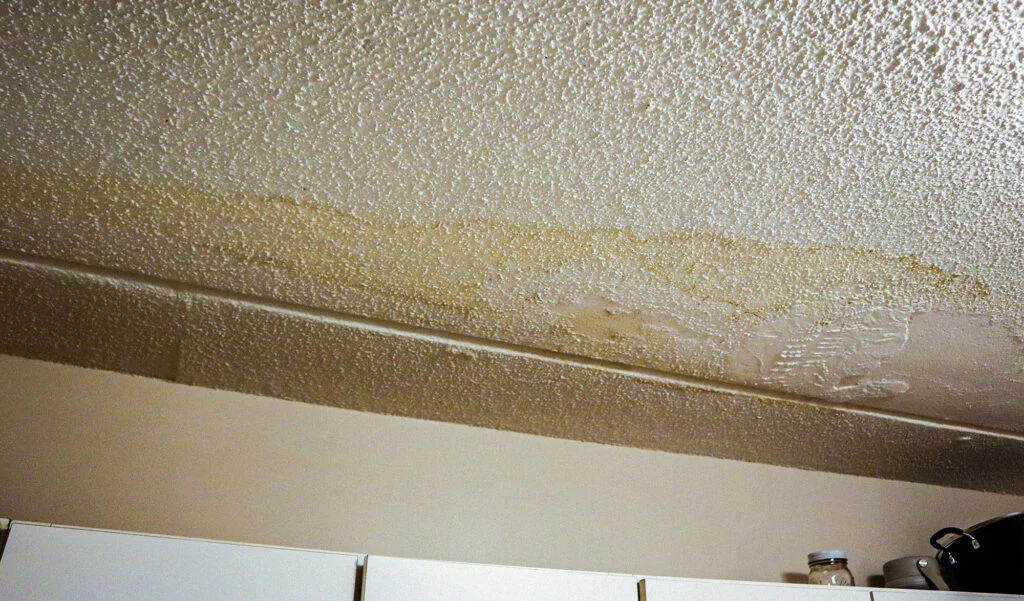
A roof leak may be obvious during rainfall, or it may first appear as a less direct interior condition.
- active dripping during or after rain
- water stains on ceilings or walls
- damp interior materials
- recurring discoloration in the same location
- water appearing near exterior walls, penetrations, or rooftop equipment
- visible membrane, seam, flashing, or drain damage on the roof
These signs confirm that further investigation may be appropriate, but they do not independently identify the exact exterior repair location.
Diagnosing the Leak Before Repair
A permanent repair should begin with diagnosis rather than with a patch placed at the first visible roof defect.
Leak investigation may include:
- interior water locations
- roof membrane condition
- seams
- flashing
- drains and scuppers
- pipes, vents, skylights, and other penetrations
- HVAC curbs and rooftop equipment
- previous repair areas
- punctures, blisters, cracks, or surface damage
- localized ponding water
- possible signs of affected insulation or roof decking
For a deeper explanation of why flat roofs leak and where water commonly enters, see our Flat Roof Leak Causes & Detection Guide.
Temporary Leak Control vs. Permanent Roof Repair
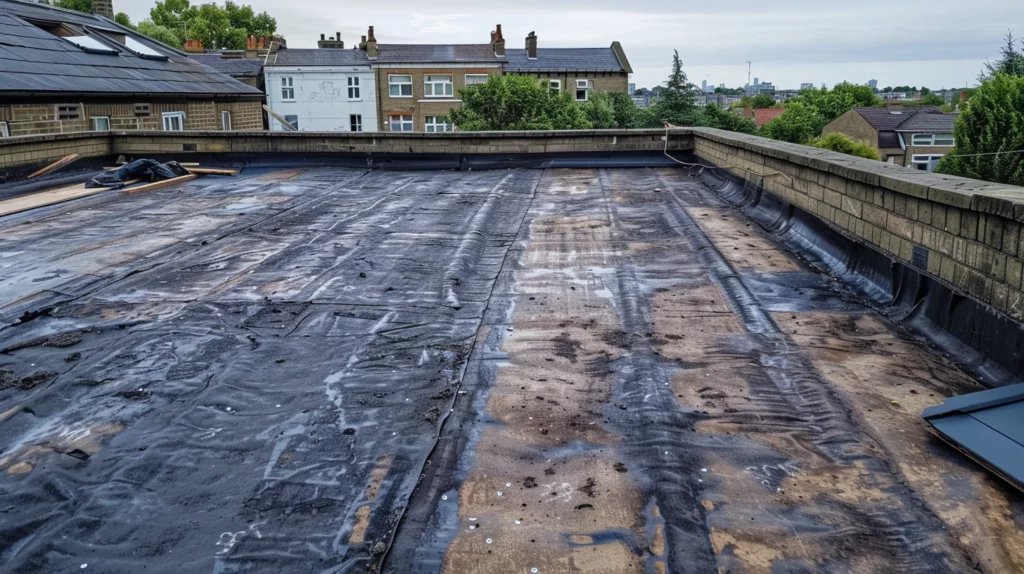
Emergency conditions do not always allow a complete permanent repair to be performed immediately.
Temporary leak control may be used to reduce ongoing water entry or stabilize a damaged area until the roofing system can be properly evaluated and permanent work can be completed.
A temporary measure should not automatically be treated as the final repair. The long-term solution should address the actual roof condition, compatible materials, and surrounding roof details.
What a Permanent Flat Roof Leak Repair May Include
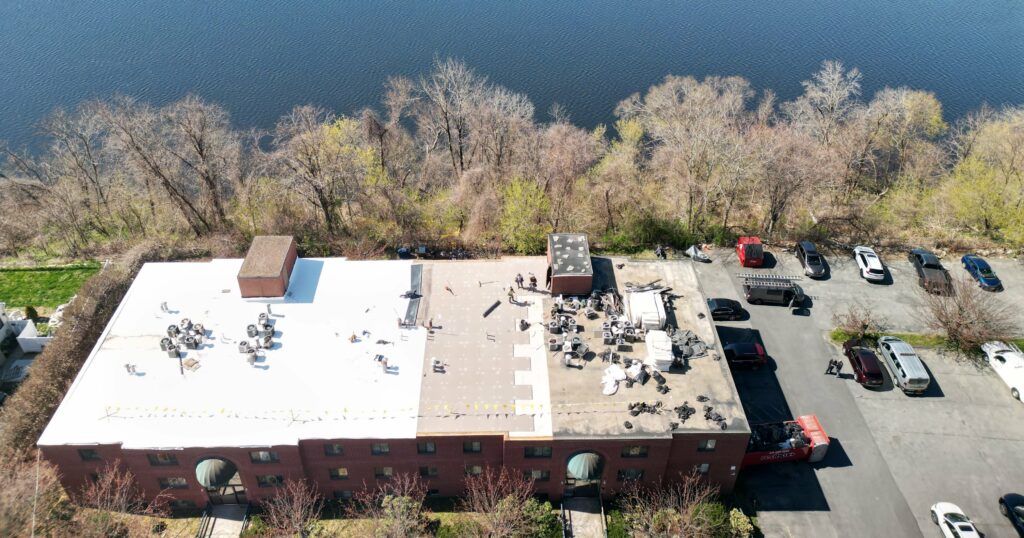
The permanent repair depends on where water is entering and what roofing system is installed.
A repair scope may involve one or more of the following areas:
- damaged roofing membrane
- open or deteriorated seams
- flashing
- drain details
- pipes, vents, or other penetrations
- roof edges or parapet details
- HVAC curbs and rooftop equipment
- previous repair areas
- affected insulation or cover boards
- localized roof deck conditions
The proposed scope should explain which conditions are being repaired and what is not included in the work.
Repair Methods Depend on the Existing Roofing System
PVC and TPO Repairs
PVC and TPO are thermoplastic single-ply roofing systems. Depending on the condition, permanent repair may involve compatible membrane material and heat-welded details around seams, flashing, punctures, or penetrations.
The existing membrane should be identified correctly before repair materials and techniques are selected.
EPDM and Rubber Roof Repairs
EPDM is a synthetic rubber roofing membrane. Repairs may involve compatible materials for seams, punctures, flashing, penetrations, membrane shrinkage, or previous repair areas.
The condition of the surrounding membrane should also be evaluated before assuming that a small visible defect is the only problem.
Modified Bitumen and Built-Up Roofing Repairs
Modified bitumen and built-up roofing systems use different multi-layer or asphalt-based assemblies. Repair scope may involve cracks, seams, flashing, blisters, surface deterioration, saturated materials, or conditions affecting several layers of the roof assembly.
For a broader comparison of flat roof repair considerations by roofing material, see our Flat Roof Repair Guide.
What If the Leak Returns After Repair?
A recurring leak does not necessarily mean the previous repair itself has failed.
Water may be entering through another nearby condition, or the original investigation may not have identified the complete path of water through the roof assembly.
When a leak repeatedly returns, broader investigation may include:
- surrounding membrane
- multiple seams or flashing details
- drainage conditions
- nearby penetrations
- previous repair locations
- wet or deteriorated insulation
- roof deck conditions
Repeating the same localized repair without investigating the surrounding roofing system may not resolve a recurring problem.
When Does a Leak Repair Become a Larger Roofing Project?
A localized repair may be appropriate when the leak source is limited and the surrounding roofing system remains serviceable.
A larger project may need to be considered when:
- leaks repeatedly appear in different areas
- membrane deterioration is widespread
- numerous previous repairs are failing
- wet insulation affects a larger portion of the roof
- roof decking requires substantial work
- drainage or slope conditions require broader correction
- the existing roofing system can no longer support practical localized repairs
The appropriate recommendation should follow inspection of the actual roof conditions rather than roof age alone.
What Affects the Cost of Flat Roof Leak Repair?
Leak repair cost depends on the actual repair scope. A localized membrane repair is different from a project that requires investigation of multiple leak areas, flashing reconstruction, drain work, insulation replacement, or roof deck repair.
Factors that may affect a proposal include:
- existing roofing system
- location and size of the affected area
- number of leak locations
- condition of seams and flashing
- drains and penetrations involved
- possible wet insulation or damaged decking
- roof access
- whether temporary control has already been performed
- additional investigation required before permanent repair
For current flat roof repair service information and pricing, visit our Flat Roof Repair service page.
What Should Be Documented After a Leak Repair?
Repair records can make future roof management and leak investigation easier.
Useful documentation may include:
- location of the reported leak
- identified or suspected point of water entry
- photographs before and after repair
- roofing system and materials used
- completed repair scope
- additional conditions discovered during work
- applicable project-specific warranty information
- recommendations for future monitoring
If water appears again later, this history can help determine whether the new leak is associated with the previous repair or a different part of the roofing system.
When Is a Flat Roof Leak an Emergency?
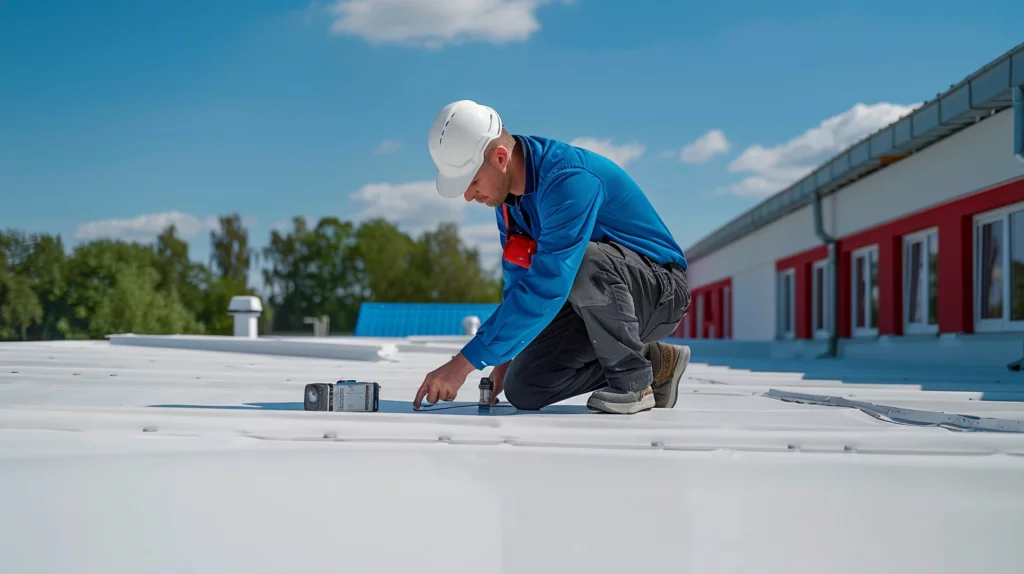
Urgent attention may be appropriate when water is actively entering occupied areas, damaging interior materials, affecting equipment, or when storm damage has exposed part of the roofing system.
Emergency work may initially focus on controlling water entry or stabilizing the affected roof area. Permanent repair can then follow after conditions allow a complete evaluation.
For an active leak requiring urgent attention, visit our Emergency Flat Roof Repair page.
Professional Tips From ID Flat Roof
Planning a Flat Roof Replacement in Boston: Cost Factors to Review
Preventing Leaks on Rubber Roofs (2026 Guide)
Why Cheap Roofing Quotes Can Cost More Later (2026 Guide)
Red Flags When Hiring a Roofing Contractor (2026 Guide)
How to Prepare Your Property for Roof Work (2026 Guide)
What to Expect During a Commercial Roofing Project (2026 Guide)

Summary
Flat roof leak repair should move through a clear sequence: document the leak, investigate the source, determine whether temporary control is needed, define the permanent repair scope, use materials compatible with the existing roofing system, and retain records after completion.
A recurring or widespread leak may require broader investigation rather than another isolated patch. The membrane, seams, flashing, drains, penetrations, insulation, previous repairs, and roof deck can all affect the final recommendation.
For planned repair service, visit our Flat Roof Repair page. For an active leak requiring urgent attention, visit Emergency Flat Roof Repair.
Frequently Asked Questions
Temporary leak control is intended to reduce ongoing water entry or stabilize a condition until the roof can be properly evaluated. Permanent repair addresses the identified roof condition using materials and methods compatible with the existing roofing system.
A recurring leak may come from another nearby condition, a different point of water entry, deterioration beyond the original repair area, or a problem affecting insulation, drainage, flashing, penetrations, or another part of the roof assembly.
No. PVC, TPO, EPDM, modified bitumen, and built-up roofing systems use different materials, seams, flashing details, and repair techniques. The existing roof should be identified before a permanent repair method is selected.
A larger project may need to be considered when leaks repeatedly return, deterioration is widespread, numerous previous repairs are failing, insulation or decking is affected, or drainage and roof assembly conditions require broader correction.
Useful records include the leak location, identified or suspected source, before-and-after photographs, roofing materials used, completed repair scope, additional conditions discovered, project-specific warranty information, and recommendations for future monitoring.

Denis is the driving force behind ID Flat Roof, a leading company in Boston specializing in flat roof repair and installation for 24+ years.
Expertise:
Denis excels in PVC, TPO, EPDM, and rubber roofing. His meticulous approach ensures quality and customer satisfaction.
Innovation:
Denis incorporates cutting-edge solutions like skylights and solar PV roofing.